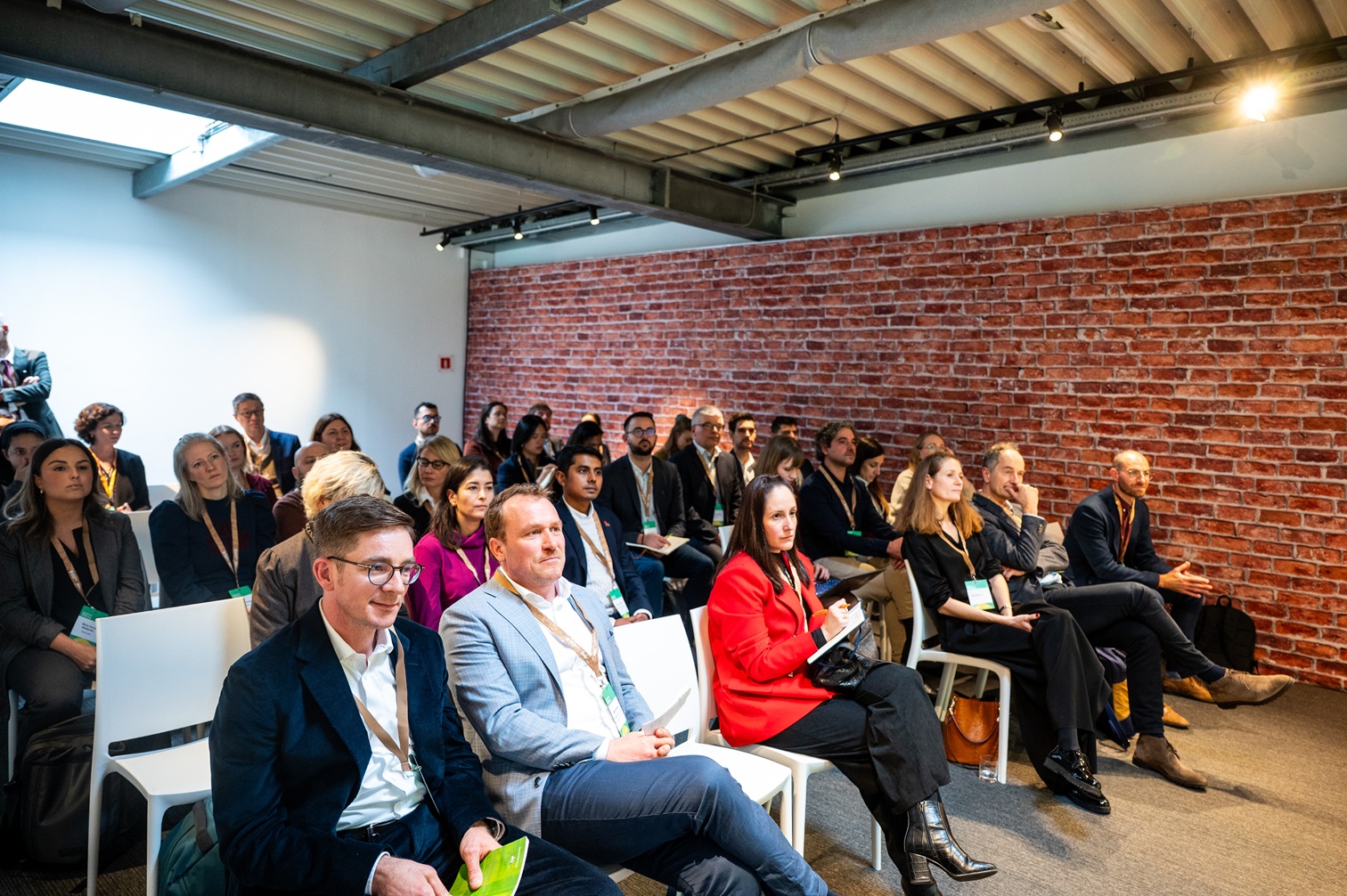
On 3 December 2025, SolarPower Europe hosted Sustainable Solar Europe 2025 in Brussels, a one-day conference dedicated to tackling the most pressing sustainability challenges and opportunities in the solar PV industry. This flagship event brought together a lineup of speakers from industry players, academics, policymakers, and other stakeholders.
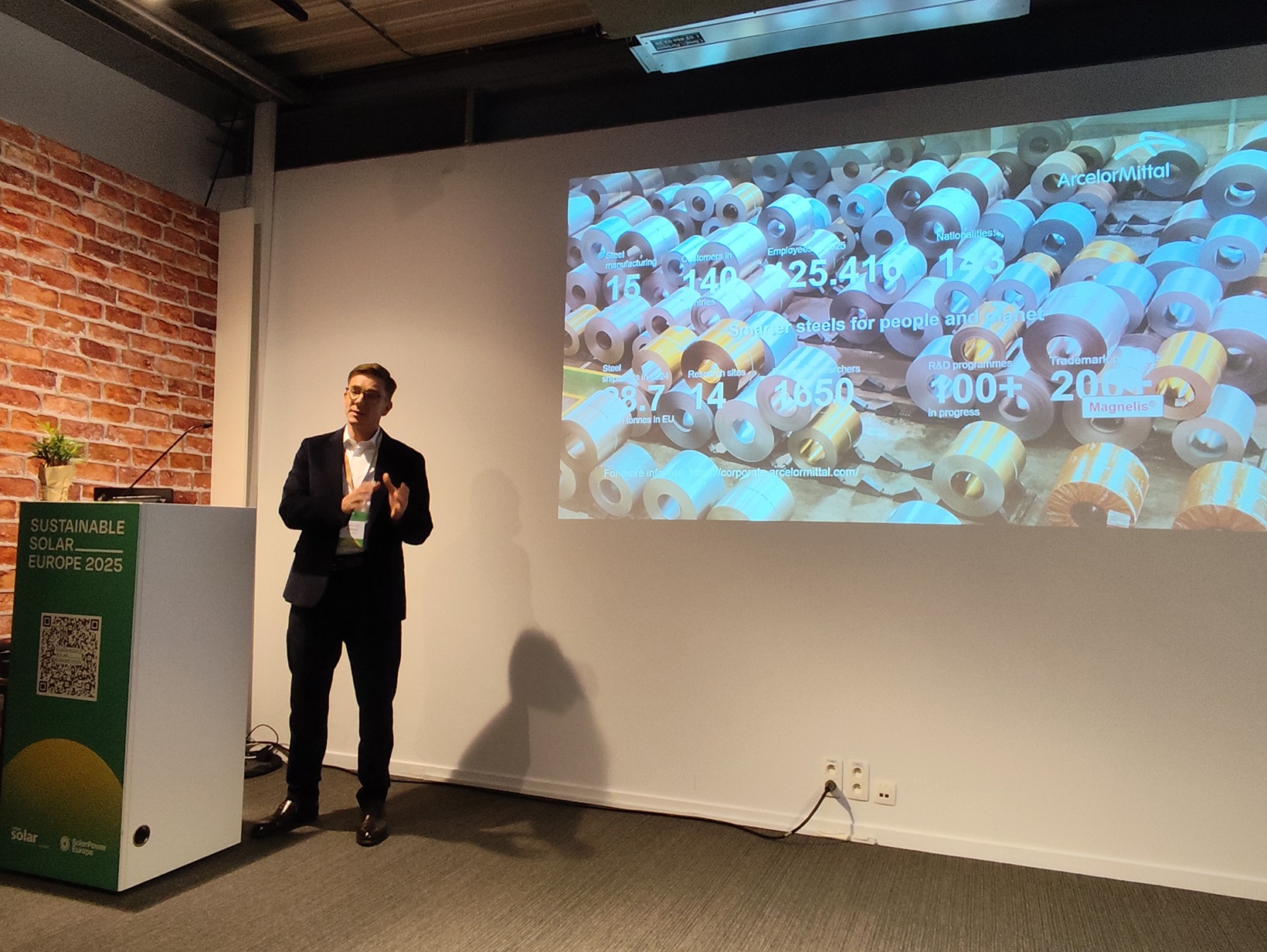
Our expert Jean-Louis Remlinger, Segment Leader Solar, joined the workshop “Strategies to Reduce Carbon Footprint Along the Supply Chain” alongside customers Zimmermann and key stakeholders, such as large PV modules manufacturer First Solar and tracker manufacturer Nextpower.
At Sustainable Solar Europe 2025, we focused on how steel can cut the carbon footprint of solar installations. A key driver is the transition from traditional steel to low carbon-emissions XCarb® steel for PV module structures. Durability is just as essential, and Magnelis®, the benchmark metallic coating for solar, delivers exceptional corrosion protection. Paired with high-strength steel, it lets us increase mechanical properties while reducing material thickness without losing performance, lowering both costs and emissions.
XCarb® recycled and renewably produced steel, made with at least 75% scrap and powered by 100% renewable electricity and available now at our Sestao site, sets a new standard for low-carbon steelmaking. Local production of Magnelis® strengthens this further as it reduces transport-related emissions. Additionally, Magnelis contributes to significantly longer lifetimes for PV farms.
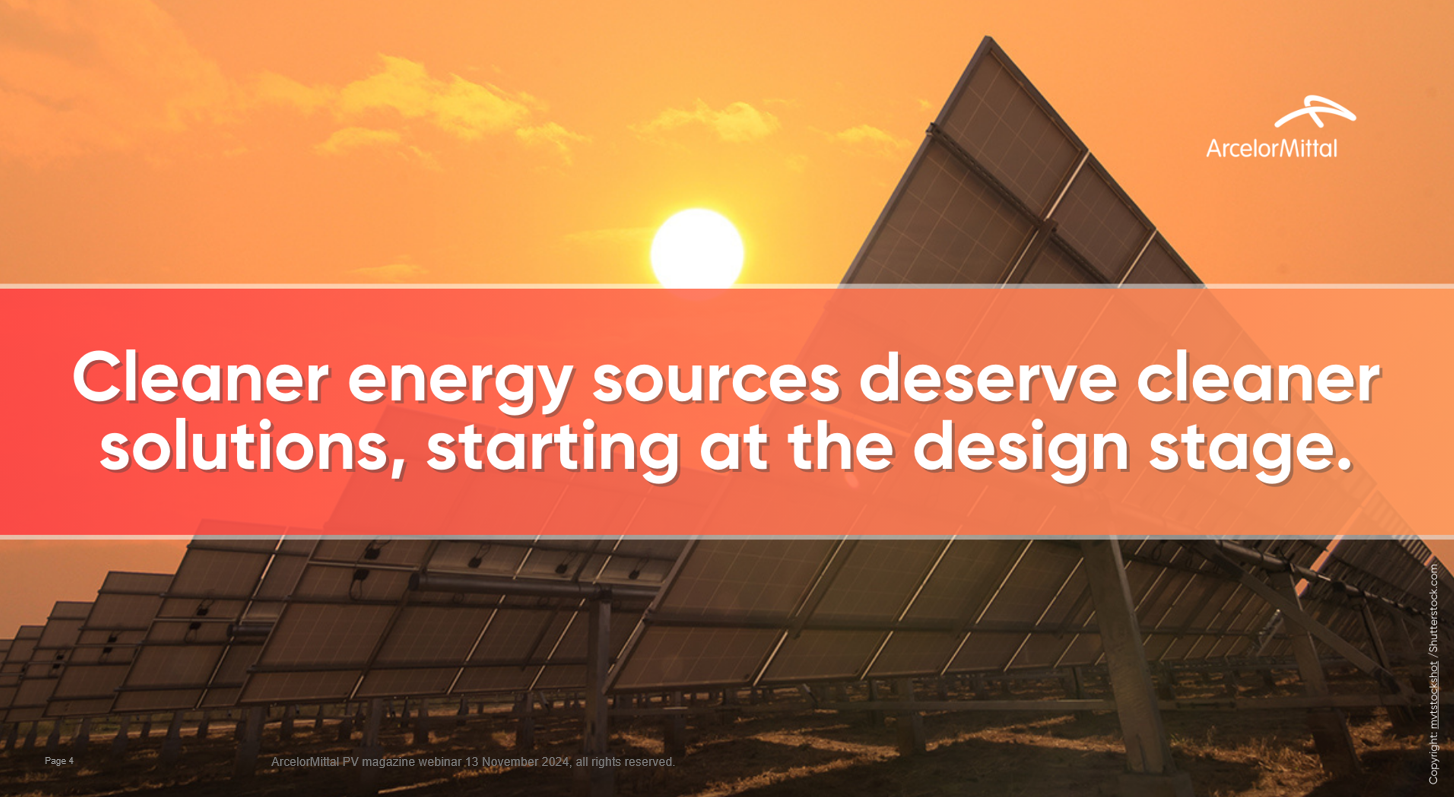
Finally, we presented insights from our study with Fraunhofer on the CO₂ payback of PV farms. By optimising the Balance of Structure (BOS), emissions can be cut by around 30% at the design stage, shortening payback time by 6 to 12 months, a solid step towards faster climate impact.